

JustRandy
-
Posts
751 -
Joined
-
Last visited
-
Days Won
53
Content Type
Profiles
Forum
Gallery
ATV Magazine
Events Calendar
Downloads
Store
Community Map
Everything posted by JustRandy
-
1990 Quadrunner LT-4WD won't idle compatible CDI
JustRandy replied to BenderIsGreat's topic in Suzuki ATV Forum
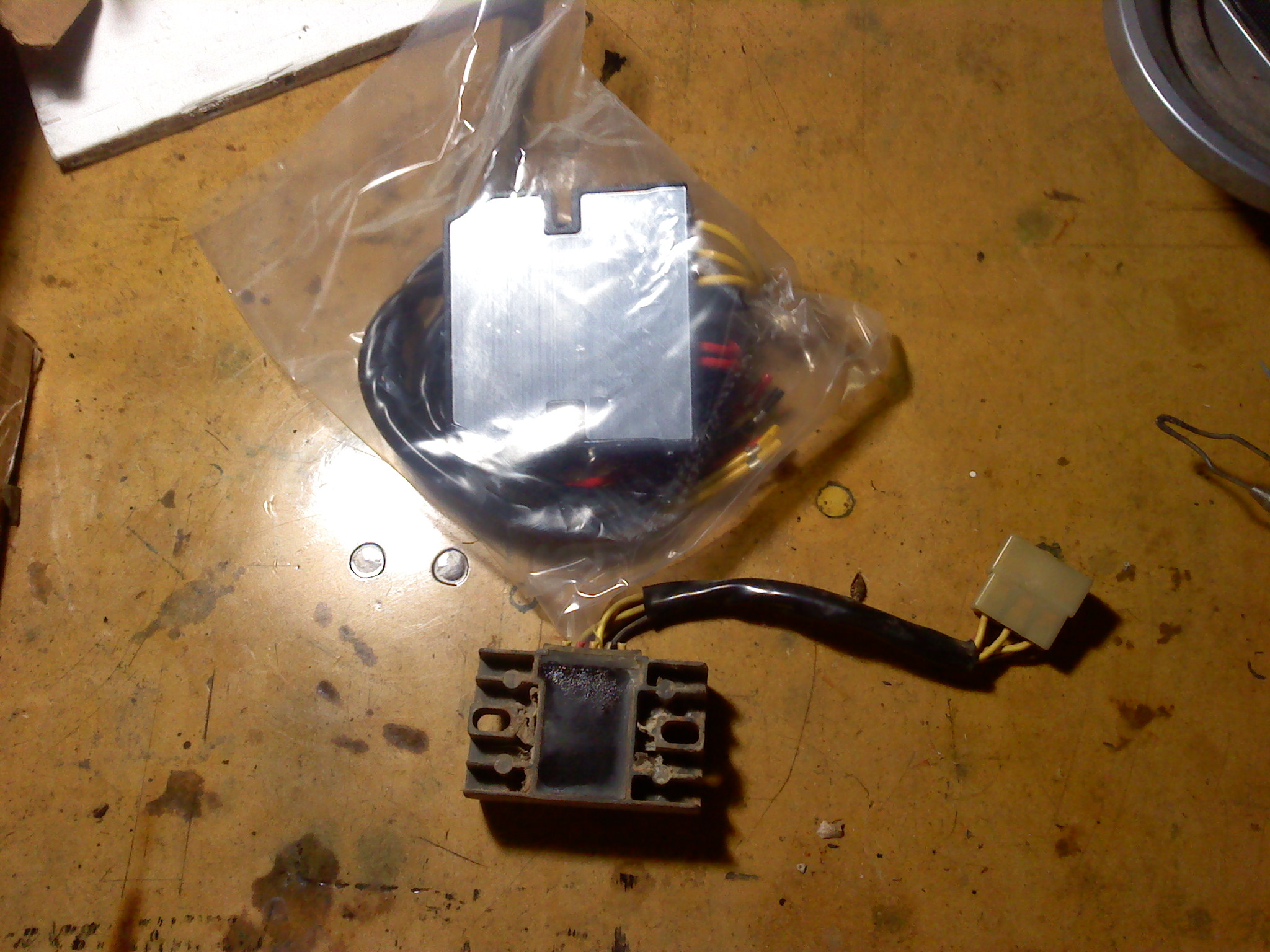
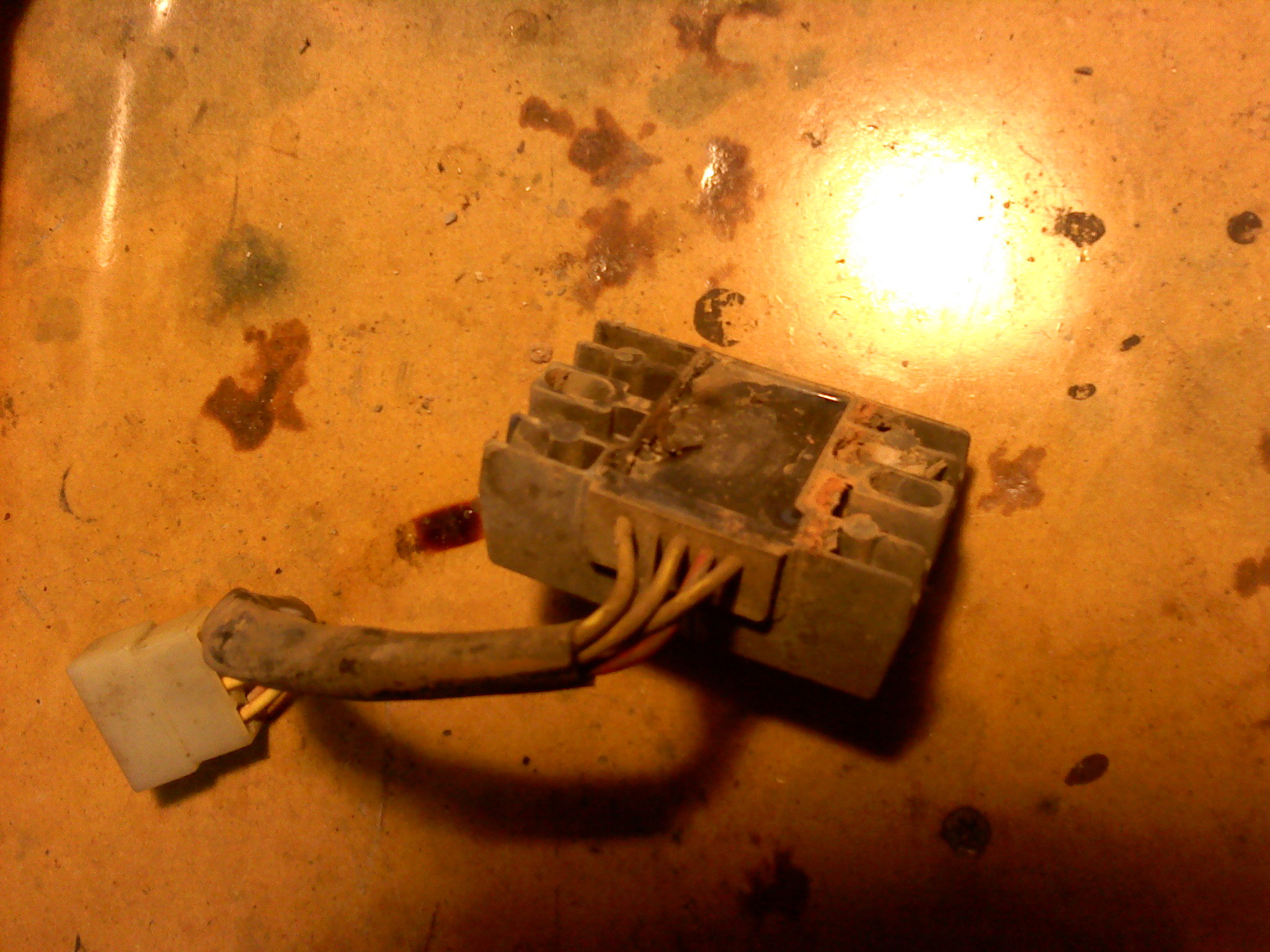
Usually the epoxy on the back is cracked or burned. Here are two examples: The one in the bag is the one from Ricks. They said it is for a Triumph and can handle 50 amps.
-
1990 Quadrunner LT-4WD won't idle compatible CDI
JustRandy replied to BenderIsGreat's topic in Suzuki ATV Forum
Yep the problem would get worse as revs increase. The way to check is to see if voltage rises beyond 14.4v with rpms. Once voltage exceeds roughly 16-18 then the CDI stops working correctly. A quick fix is to turn the lights on which reduces the voltage. There are threads all over the net complaining that the engine only runs with lights on. It's such a common problem that I recommend every owner of these 4x4s swap the regulator first thing. -
1990 Quadrunner LT-4WD won't idle compatible CDI
JustRandy replied to BenderIsGreat's topic in Suzuki ATV Forum
It's on the front to the right of the steering stem bearing (would be passenger side if it's a car). It's hard to get to with the plastic in the way so I cut the plastic and either used zip ties to put the "door" back on or else left it off. It don't look too bad, whatever I did. I'm pretty sure your regulator is bad because they all are. Ricks is the way to go. https://ricksmotorsportelectrics.com/ Call them and tell them you want something that can handle lots of amps. -
1990 Quadrunner LT-4WD won't idle compatible CDI
JustRandy replied to BenderIsGreat's topic in Suzuki ATV Forum
I've never seen a bad CDI, but problems when hot do indicate electrical issues. Check the regulator. All those quads have bad ones or will eventually. Just pop it off and look at the back. Another way to test it is to turn the lights on and see if it runs better. Put a big electrical load on it to lower the voltage. The problem is the voltage runs up to 16-18 volts and causes the CDI not to function. Turning the lights on reduces the voltage and restores CDI functionality. If it is the regulator, don't buy another stock one. Contact Ricks Electronics and order something bigger. That engine doesn't care about compression leaks because the stroke is longer than the bore. The only symptom it would produce is hard starting when cold. I have the kingquad 300 and have put the 250 CDI on because it has a higher rev limit. -
1990 Suzuki Quadrunner 250 LT-4WD - Mixture and Valve specs
JustRandy replied to BenderIsGreat's topic in Suzuki ATV Forum
No clue about the turns, but any carb with the screw towards the front of the carb has a fuel screw (turn out to richen) and any carb with the screw at the tail has an air screw (turn in to richen). 0.002" intake, and 0.004" exhaust is correct. Those are averages. I always set the intake to .001 which is the smallest perceptible movement. Like Mech, I don't use feelers. If you find that your intake valve has no clearance at all then it means the valve is wearing and you will have to regrind the seat and purchase a new valve, preferably one made in Japan. If the engine is nearly impossible to start when cold, then it almost certainly needs a new intake valve. -
Calling me names because you disagree with a service manual is of no help to anyone, least of all yourself. You should have just said, "Oh, my bad. I made an easily understandable mistake." But you can't say that because you've already touted being an expert on carbs with 50 years under your belt. How could anyone like that ever admit being wrong? I'd prefer someone who knew a little less but could admit being wrong to someone who is sure he knows it all because the one who knows how to be wrong will be right eventually while the one who knows it all will be stuck forever clinging to a fallacy for fear of looking dumb. That is the basic reason why science advances funeral by funeral. https://en.wikipedia.org/wiki/Planck's_principle The only sure impediment to truth is the conviction you already have it.
-
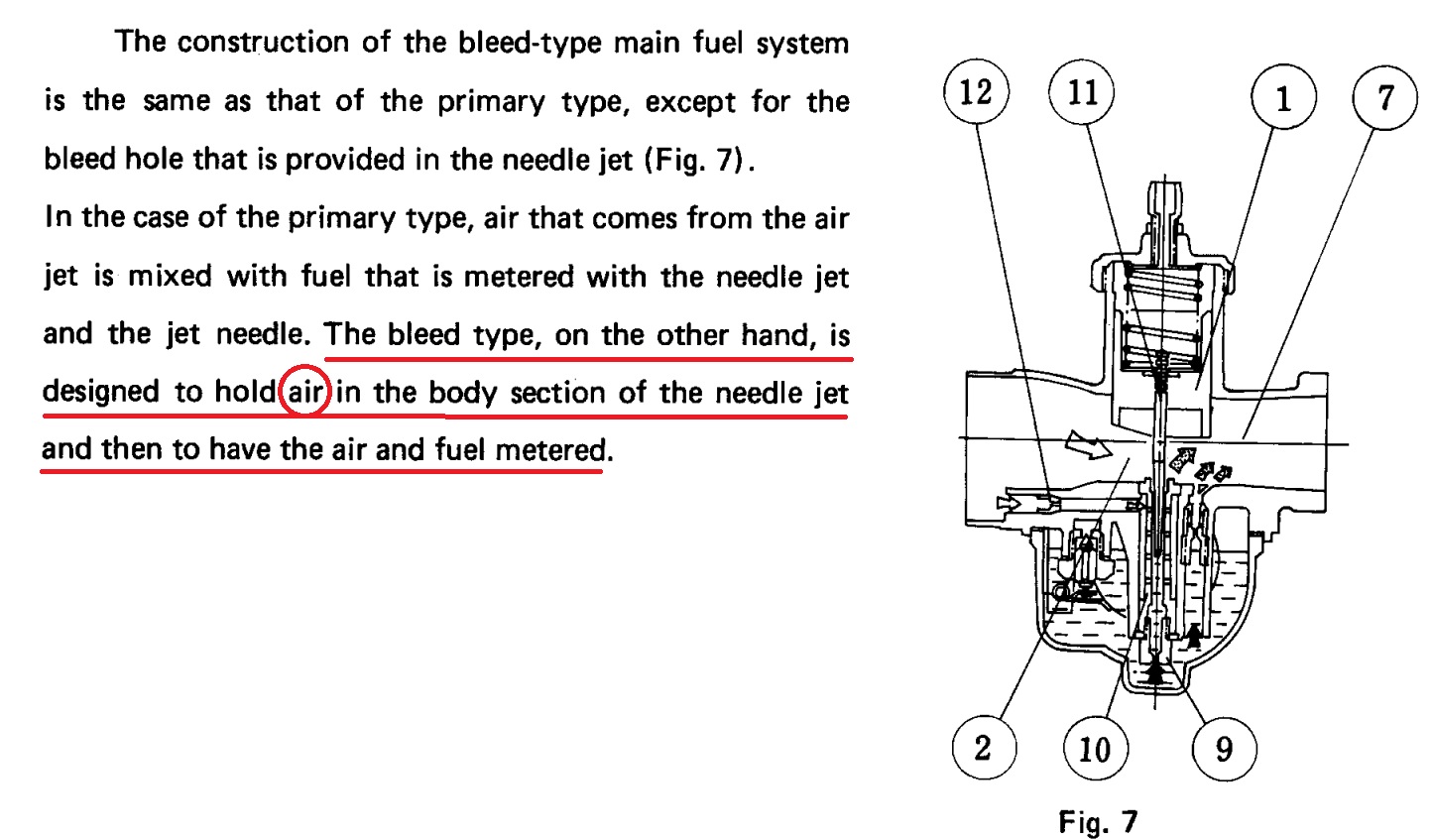
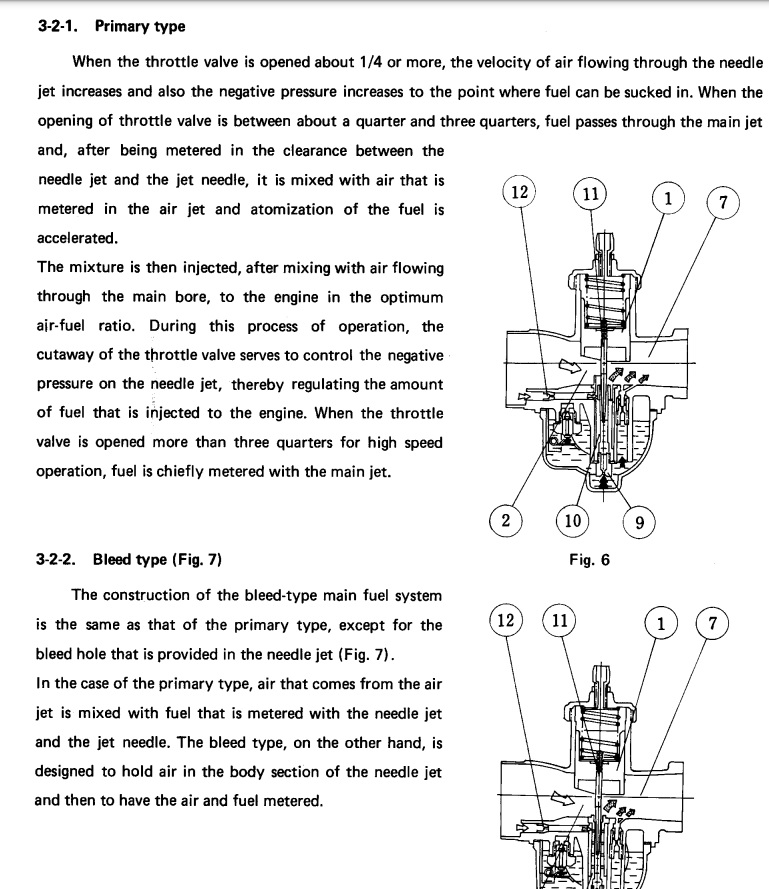
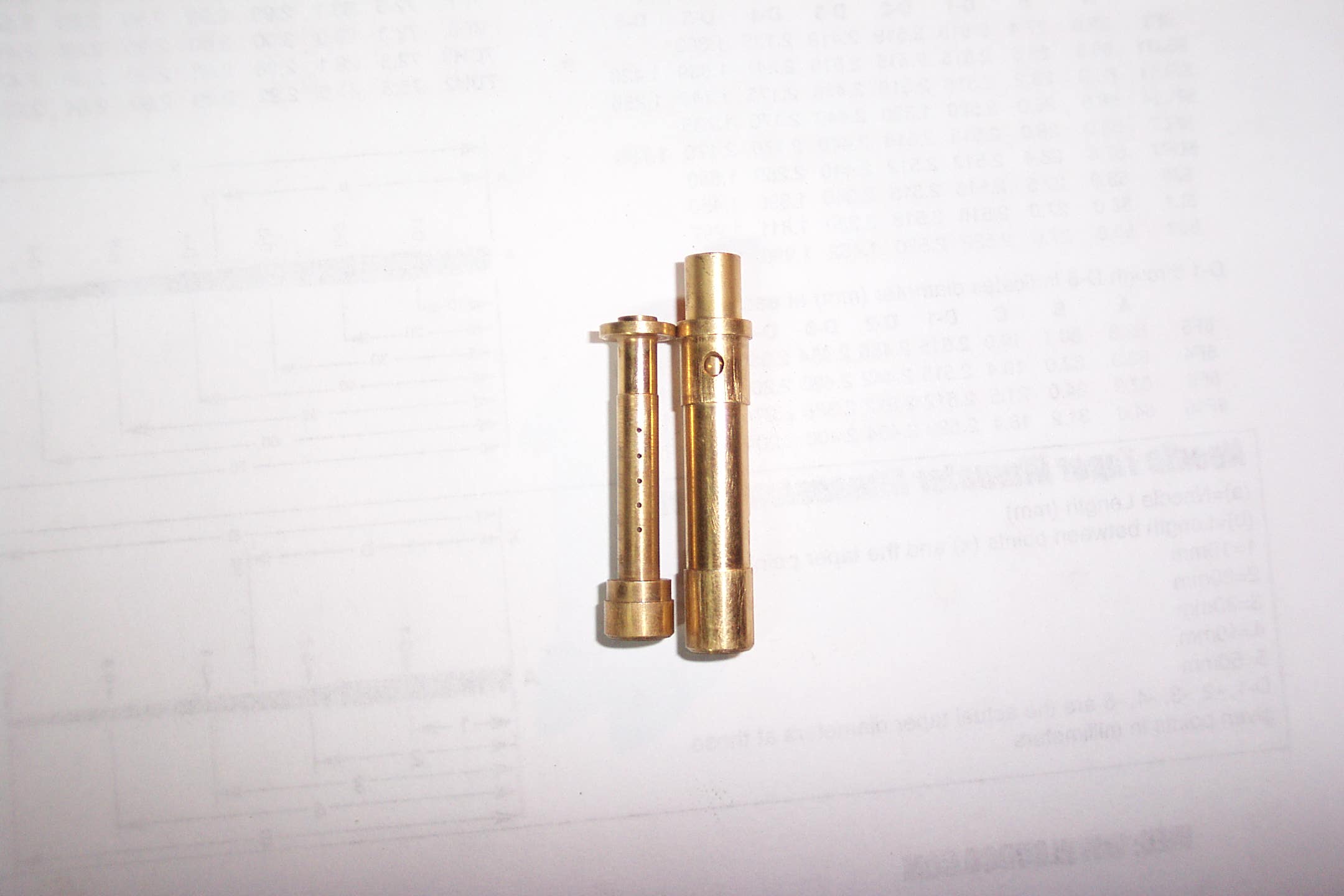
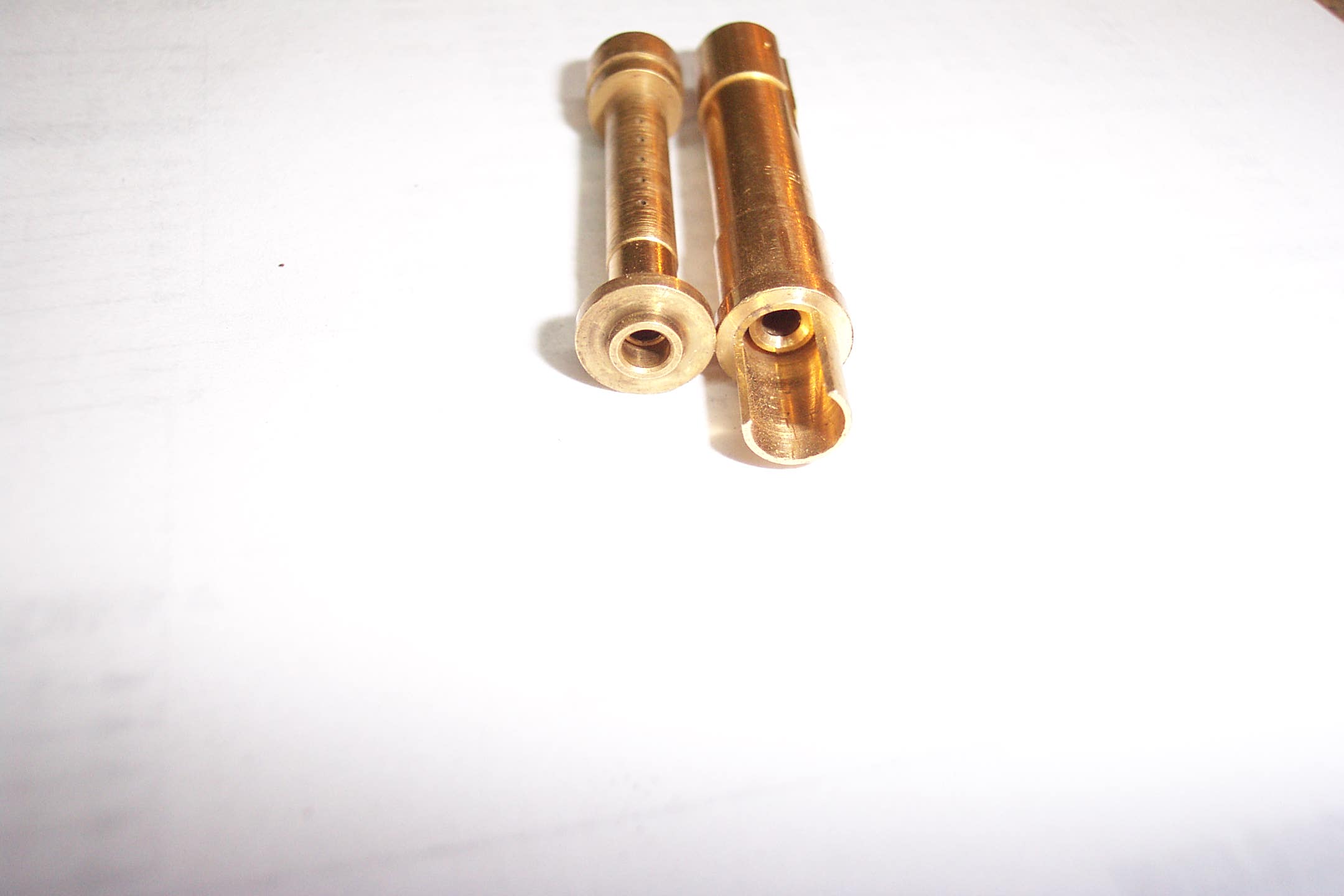
When the engine is not running the well will be filled with fuel as you say, but so long as the air jet (#12 in pic) is passing air then the well will be filled with air. I suppose the question is at what point the air jet begins to pass air and I'm not sure how we could determine that with any certainty. The way they worded that suggests that if there is any fuel in the well, it is so quickly evacuated and replaced with air that it's irrelevant. If it were designed to hold fuel, I think they would have specified that. Not sure what that's supposed to mean. You tell me to download a manual, then you suggest the manual is wrong... and because you disagree with the manual you threaten to give me the cold shoulder? Obviously I did that or I wouldn't be in possession of both tubes. I did every conceivable experiment, including plugging the air jet, removing the air jet, swapping with other air jets. Unfortunately that was over a decade ago and I've forgotten many of the results. Seems like there was no way to get the bleed type to work properly. I also have a variety of slides. I've even filled the cavity of the bottom of slides with JB weld and have ground the cutouts of slides with rotary tools in my experiments. I left no stone unturned. When I say there is no way to get that carb to work, I mean practically any combination of slide, needles, needle jets, air jets, main jets that Mikuni offers will not work. There is something fundamentally wrong with the design of that carb.
-
Is Mikuni also welcome to their opinions? They also believe the little holes are to mix in air, not extra fuel. The primary needle jet is a straight tube drawing up the fuel while the air comes up through a separate opening around the tube. The air and fuel are not mixed together in the tube. I guess it's good enough for 2-strokes. But with the bleed type the air bubbles into the fuel as it's drawn up the tube. You're right that it's important for those little holes to be unplugged, but to prevent the carb being too rich, not too lean. I guess we both learned something lol. I'll pay more attention to cleaning those holes in the future.
-
My opinion is it's junk, designed before CAD existed, and instead of tossed out of production they just relegated it to 2-stroke engines. Some carbs have design flaws and the existence of those flaws makes them junk because the flaws are not able to be remedied or compensated for without starting over with a new chunk of aluminum and new design. Over the years I've seen many tutorials recommend snapping the throttle as a test that supersedes blindly lowering the idle speed and readjusting the mixture screw. All that matters is the performance and as I said before the only reason for a pilot circuit is to generate a strong vacuum to facilitate starting. So other than that there is nothing fundamentally wrong with idling with the slide a little higher. I don't care much about qualifications; only results. If the tutorial produces the results, then they're qualified. I believe those little holes draw in the air from an air jet. #12 in the pic.
-
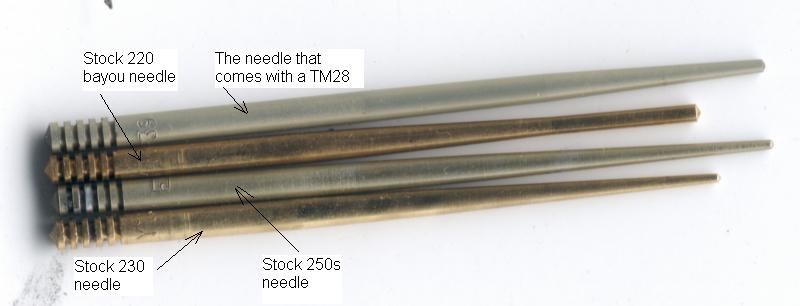
That jogged my memory. The tube is how I know it's a 2-stroke carb. I remember swapping that too with no luck. I thought I posted these pics earlier: The 230s and 250s carbs are the same but look how different the 250s needle is.
-
It says "Super Tuning Manual" by Mikuni. https://www.mikuni.com/pdf/vmmanual.pdf I've read that it's a 2-stroke carb which explains all my trouble. I fiddled with it for years on various engines and never could get it tuned right on any 4-stroke engine. In the end I figured there must be a fundamental flaw with its design which makes it better suited for 2-strokes. To me it's essentially junk and that's the advice I'd give anyone thinking about trying one. If you're looking for a good puzzle, they only cost about $100. A guy I met on an atv forum sent me one for free 15 years ago which is how I got involved with it. It turned out to be a very expensive gift, but I learned a lot about carbs.
-
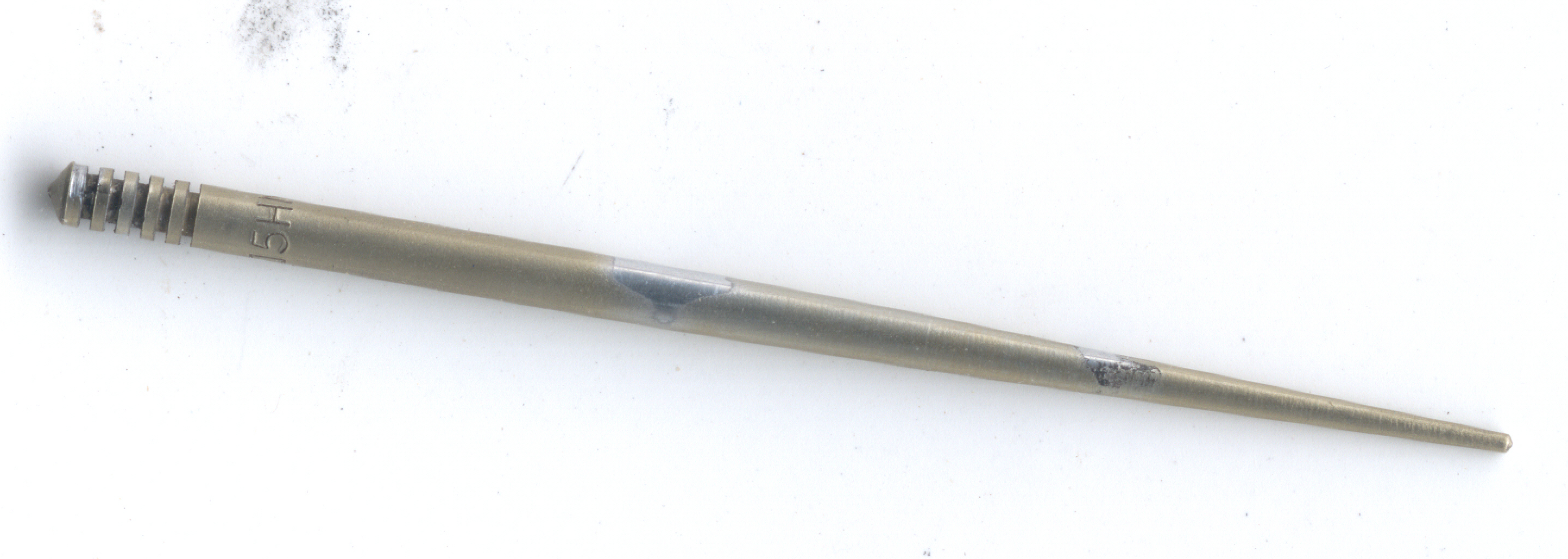
Getting that manual is pretty much what I did. The pics I posted are from the VM mikuni manual. Practically everyone back in the day was putting TM28 flatslides on their 230 quadsports, but as far as I know no one got it tuned perfectly. A common question was what pilot jet everyone else was using because no pilot jet ever seemed to work. A buddy had a 350 warrior that he put a 32mm roudslide on and it was a constant nightmare that went on for weeks. He'd buy a few needles and we'd tinker all day trying to figure out which needles in the catalog we should try next, then he'd go order them and wait. That went on and on seems like forever. We never got it perfect, but good enough to ride. My 300 king quad had a restrictive small carb for torque, but I installed a sport cam and ported the head and high comp piston so I needed a bigger carb. I settled on a 30mm mikuni from some dirt bike on ebay. It runs great except for a lean spot just above idle that I can't make go away. If I richen the lean spot then the idle is too rich. And I already have an extra washer under the needle to raise it more so I can't richen the upper throttle opening anymore without sanding needles or buying a bunch of random needles which I don't want to do. So I just live with the lean spot which gets better as it warms up. I also have a 300 Lakota with a 32mm roundslide that I'm sure also has that problem because the 32mm mikuni is junk that won't work right on anything. Basically, in my experience, anything that isn't stock is going to have the problem. At the factory they have the tools and machinery to get carbs tuned perfectly, but I don't. I've tried installing an O2 sensor on the header but it didn't help. Those experiences taught me a lot about carbs but I don't want to do it again lol I actually have pics of worn needles. I'll see if I can find them tomorrow. The vibration wears the jet-needle and needle-jet, so the needle gets smaller and the jet gets bigger over time. You might be able to compensate by leaning the pilot mixture or lowering the needle.
-
Well I do want advice and help because most carbs I encounter that need tuning ultimately have that problem. I have 3 atvs now with that problem. The easiest thing I know to do is turn the idle speed back up and readjust the mixture until the stumble goes away. Other than that I'd have to spend hours, days, weeks as I always have struggling to get it tuned. I've ground slide cutouts with rotary tools and have sanded needles in addition to drilling jets trying to get aftermarket carbs to work on modded engines. It was fun the first few times as a learning experience but now it's just too much work, so if you know an easier way I'd appreciate it.
-
Ok, oracle of engines, answer the question: if the carb is tuned per your instructions and the result is a stumble when the throttle is stabbed, how would you solve it?
-
How do you know what carb manufacturers think? Turn the mixture screw until rpms are at a maximum then turn the idle speed screw down to reduce rpms then turn the mixture screw until rpms are a maximum then turn the idle speed screw down and at the end of that process the engine idles great but you stab the throttle and the engine dies. Now what? Option 1: Tear the carb apart and spend lots of money on jets, needles, slides and spend hours and days and weeks struggling to tune it like Mech says you should. Option 2: Turn the idle speed screw back up and turn the mixture screw until the rpms are where you want them and verify the engine doesn't die when the throttle is stabbed. Done. Easy. Which is the good idea?
-
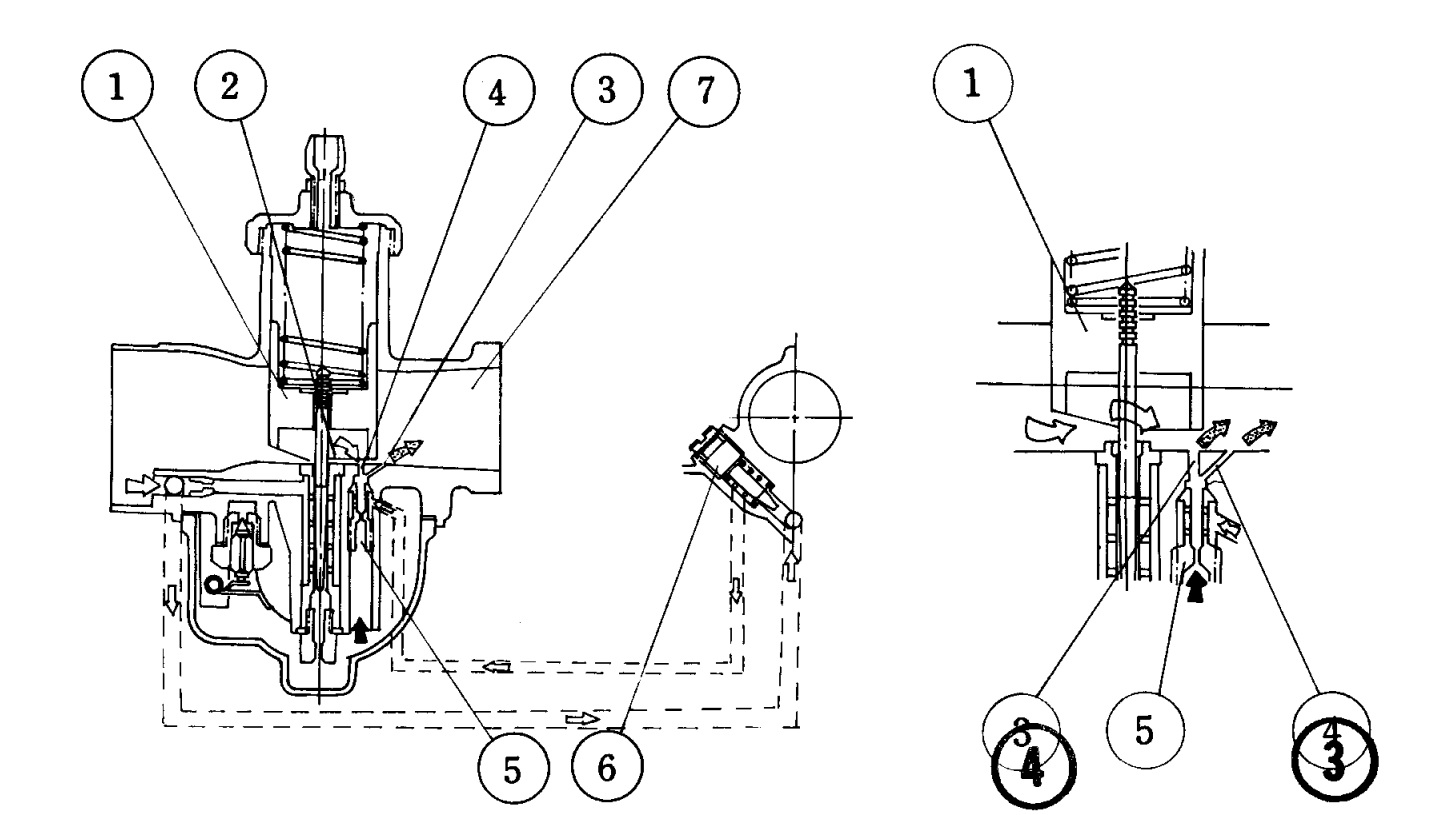
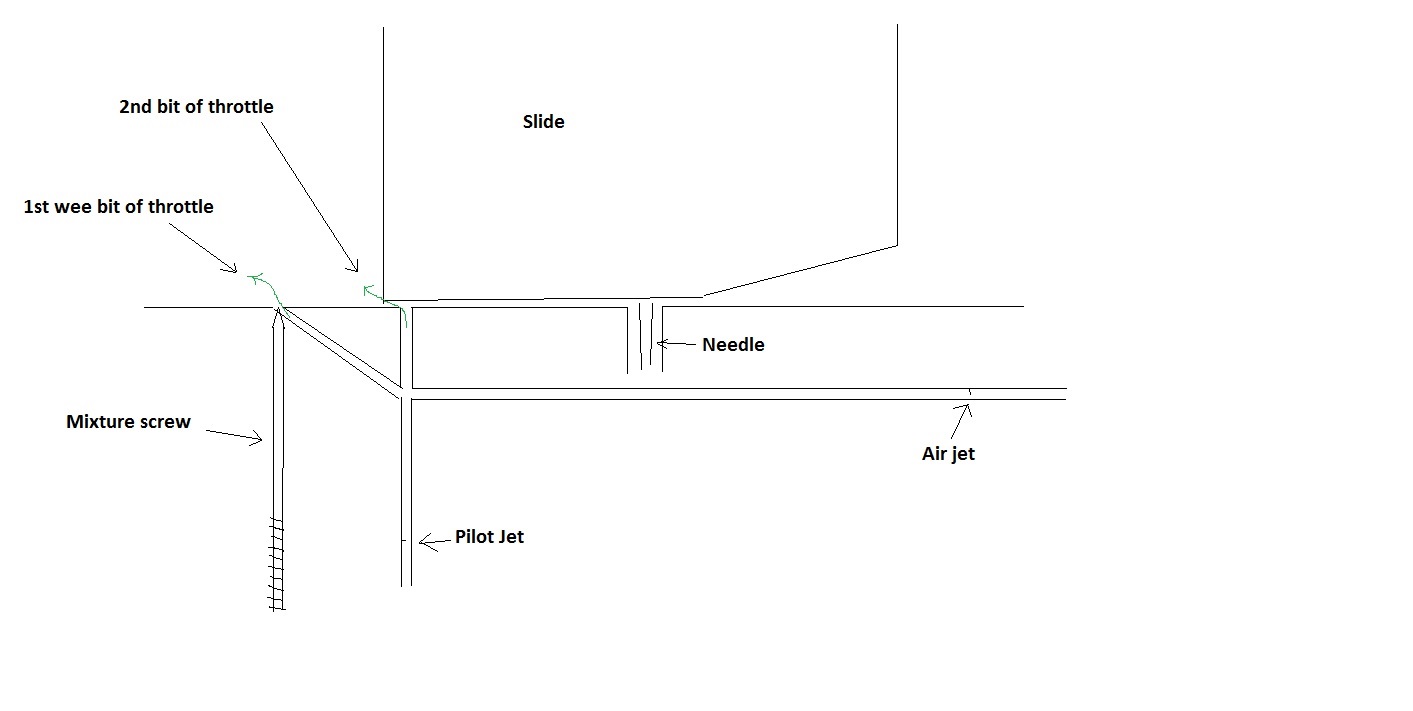
Here is a graphical representation. When the slide is closed, a vacuum is easily generated which draws fuel and air mixture up through the pilot opening (3 in the pic). If the turns on the mixture screw are correct then the engine will idle fine. When the slide is opened just a hair, suddenly air rushes in and the vacuum drops. That's where problems start, and in this picture they remedied that with a bypass outlet (4 in the pic) which draws fuel directly through the pilot jet to help make the transition from closed slide (high vacuum) to open slide (low vacuum). On larger carbs the problem is remedied with an accelerator pump that squirts fuel into the venturi. That transition from high to low vacuum is the most difficult part of a carb to tune and my idea is to eliminate it altogether by never closing the slide and relying totally on the pilot circuit. The only downside is it's difficult to generate enough vacuum to draw fuel up the needle jet to start the engine with a pull cord or kicker if the slide is still open. The upside is there is no transition to worry about and the throttle response will always be crisp. If you have a stock bike and stock carb, great! You can easily set things by the book and not worry about any of this. If not, then you're certainly welcome go through this tuning nightmare all you want. I complimented you on a good idea and offered an alternative way of doing things which for some reason caused you to get bent out of shape. All you had to say was "Thanks!" and "Good idea!".
-
If we take a carb that is tuned properly to run from just off idle to WOT then there will never be a shortage of fuel at any opening above idle. Then if we tune the pilot circuit such that the carb idles with the slide open a bit then there will still never be a point where there is a shortage of fuel. The only issue with tuning it like that is: because the slide is open a hair the engine needs to develop more vacuum to draw gas out of the needle jet which makes it harder to start manually, but it's not an issue with electric start. The advantage is the tuning procedure is easier because the pilot circuit is less relevant and the throttle response is crisp with no stumbles. Your way requires everything in the carb be absolutely perfect (slide cutout, pilot jet, air jet) in order to have seamless transition from idle to off-idle, and that's often not the case, especially with aftermarket carbs or switching carbs to different engines or tuning stock carbs after modifying engines. There are a range of slide cutouts available and you can't just pick one and make it work. There are a range of jet needles and needle jets and pilot jets and air jets. It's a puzzle with at least 5 variables to tune to make work right just to transition from idle to off-idle. So to avoid that nightmare I just tune it with the slide open a bit then there is no transition to worry about. The downside is it's hard to use a pull cord or kick starter to generate the vacuum necessary to draw fuel out of the needle jet with the slide open a hair. If not for the issue of starting, a pilot circuit wouldn't be necessary at all.
-
That is genius, I gotta say. Thanks for sharing! Often the problem is when I tune it like you say, then I get a stumble just off closed throttle indicating the needle and slide cutout interactions aren't able to compensate quickly enough. So I like to tune it such that it idles a little more on the needle/slide circuit rather than fully closing the slide and adjusting the pilot/airbleed circuit, that way there is no big change to compensate for. The downside is it may be harder to start the engine manually because the more the slide is open the more vacuum must be generated to draw enough fuel through the needle-jet to mix properly with the air which means the piston has to move pretty fast, but with electric start it's no big deal.
-
Another one back from the dead (1997 King Quad 300 LT-FWDX)
JustRandy replied to Hagbard's topic in Suzuki ATV Forum
After convos with admin and a day to think about it I no longer believe anyone has intention to censor here and it was likely just a confluence of a string of odd events that led me to have that mistaken impression. All is well, let's carry on. -
Another one back from the dead (1997 King Quad 300 LT-FWDX)
JustRandy replied to Hagbard's topic in Suzuki ATV Forum
I don't support sites that engage in censorship so this is where it ends. -
Another one back from the dead (1997 King Quad 300 LT-FWDX)
JustRandy replied to Hagbard's topic in Suzuki ATV Forum
Cool thanks. I was dreading rummaging youtube for a good video. -
Another one back from the dead (1997 King Quad 300 LT-FWDX)
JustRandy replied to Hagbard's topic in Suzuki ATV Forum
Pull spark plug out. Take intake valve inspection cap off. Pull the pull cord slowly until you see the intake valve move. Then I always put a screwdriver in the spark plug hole to feel the piston while pulling on the rope to find TDC, but there is also a cap covering an inspection hole on the other side of the engine that has TDC marks. One way or the other, find TDC after the intake valve moves and that should be TDC on the compression stroke. Once you have it fairly close to TDC on the compression stoke, then just grab the rocker arm and wiggle it up and down. If there is no gap (clicking or tapping sound) then that's your problem. It's supposed to be .001 - .003. Let me know what you find. -
Another one back from the dead (1997 King Quad 300 LT-FWDX)
JustRandy replied to Hagbard's topic in Suzuki ATV Forum
I've never seen a bad ignition coil or cdi so it probably wouldn't be that, as you discovered. I always change plugs just because it's easy. Even if the plug is brand new. I've seen new ones not work right. It could be practically anything but if it's associated with heat it's probably electrical. If it's not associated with heat then I'd check the intake valve lash first thing. Do you know how to do that? -
Another one back from the dead (1997 King Quad 300 LT-FWDX)
JustRandy replied to Hagbard's topic in Suzuki ATV Forum
That only thing I can think is the regulator. Hard starting when hot is usually electrical. Try a new spark plug. -
Another one back from the dead (1997 King Quad 300 LT-FWDX)
JustRandy replied to Hagbard's topic in Suzuki ATV Forum
Kinda looks like a caterpillar nest. The oil rings look flat from what I can see.