-
ATV Forum Leaderboard & Trending ATV Discussions
Welcome to the QUADCRAZY ATV community leaderboard featuring the most active ATV forum members, trending ATV discussions, popular repair topics, and top-rated ATV content from across the community.
Explore ATV troubleshooting, maintenance tips, Polaris repair discussions, Honda ATV topics, Can-Am forums, Yamaha ATV discussions, ATV accessories, mud riding setups, trail riding advice, and more from fellow riders.
🔥 Trending ATV Discussions
🛠 Popular ATV Topics & Tags
Browse popular ATV discussions covering ATV winches, mud tires, snow plows, batteries, helmets, maintenance, oil changes, repairs, upgrades, and trail riding setups from riders across the QUADCRAZY community.
🏁 Popular ATV Forum Categories
About the QUADCRAZY ATV Community
QUADCRAZY is one of the largest ATV forums online featuring ATV repair help, trail riding discussions, ATV modifications, buying advice, maintenance tutorials, and off-road community discussions covering Polaris, Honda, Yamaha, Suzuki, Kawasaki, Arctic Cat, Can-Am, and more.
Leaderboard


Popular Content
Showing content with the highest reputation on 03/29/2023 in all areas
-
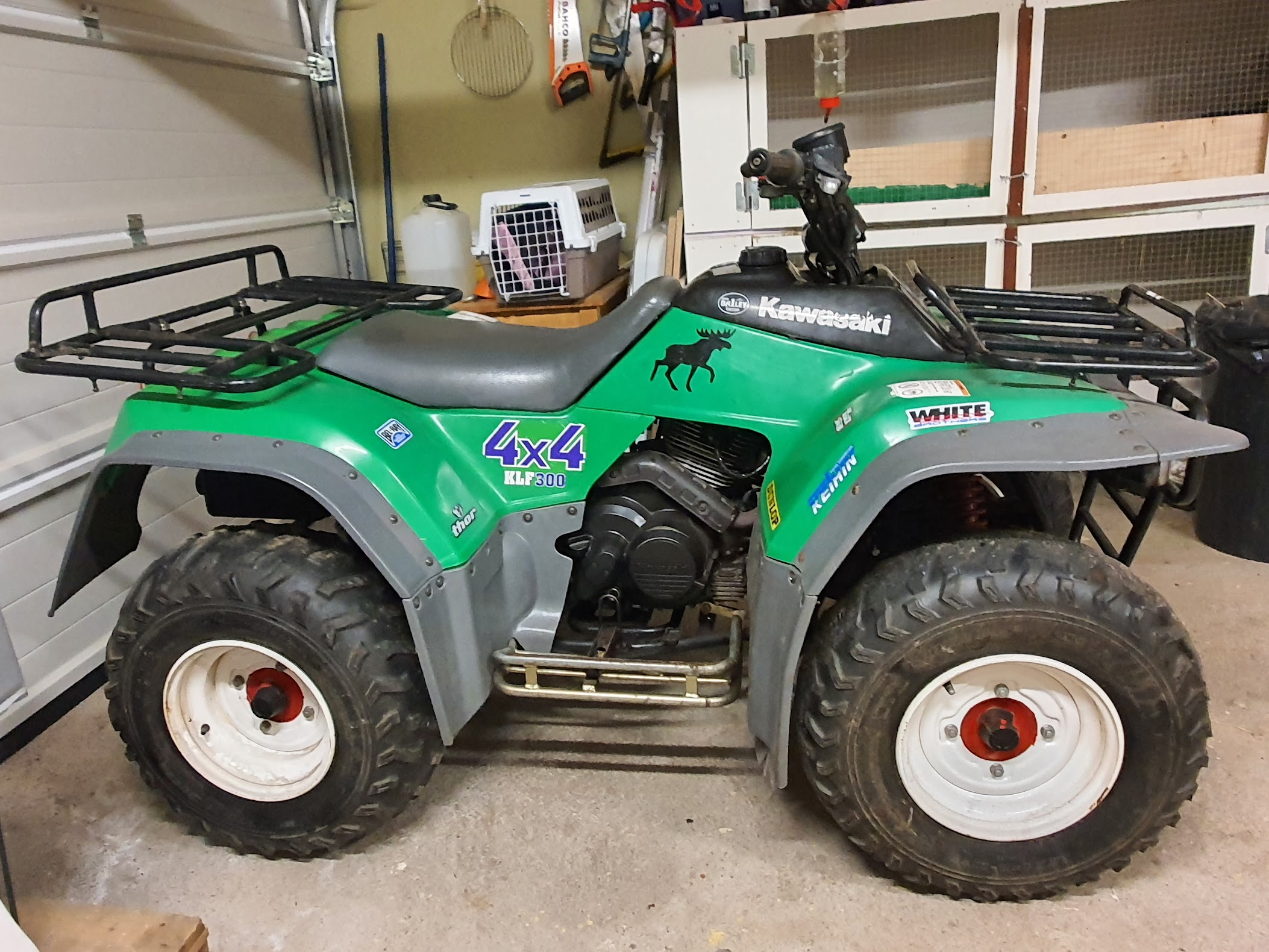
Hi, I have an EU '94 KLF300 Bayou with ignition issues. I got it last summer and used it for about 20 hours, then one sunny day we used it for about an hour, parked it, and then it didn't want to start again. It has a *really* weak spark, I've only been able to see it once while testing. I'm just getting started on this, I'm going to go through all the weak/no spark trouble shootings from the manual. Since I've already invested like 10 hours digesting the manual and forum threads that I possibly can, I thought that it would be nice to create a thread like this in case I come up with a solution that can help someone else. So far I've replaced the spark plug, I will replace the spark plug cap with a NGK VD05F (5kOhm resistance). I'm going to check the resistance in the pickup coil, stator coil and ignition coil next. I have tried two CDIs, right now I mounted the original CDI which actually gave the most output to the spark plug out of the two A question for you, is it possible to make any assumptions about the CDI by measuring the resistance like in the manual? There's a "resistance table" that you can refer to when measuring between the different connections. I'm asking because I haven't yet seen anyone in the forums that has mentioned that they've measured the CDI resistances and made any conclusions from that. I'll attach a photo of my Bayou Pär, Sweden
 1 point
 -
Well first off, when you were checking the earths and saw a small voltage, how much voltage was it ? If it was a half a volt it's too much really. You need to find the bad earth connection. With a bad earth it's possible that when you spin the engine over by hand you might see a spark at the plug, and if you spin it over with the starter and the plug out the earth might be god enough to allow cranking and a small spark, but when the plug's in, and the starter's working hard, that bad earth could be enough to prevent the coil working properly. The air gap is preset and isn't likely to be your problem. All you need to check is that the trigger/pulse coil has the correct resistance, and that it puts out a small voltage when the engine is spinning over. It probably only puts out about one volt, and it only does it once per revolution and it's very brief. Most digital gauges won't pick that brief voltage up. It's best to use an old fashioned analogue gauge with a needle. You will see the needle jump. It won't be readable but as long as it jumps then you know the magnet or trigger plate on the rotor is attached and doing it's job. Even when the trigger coil has the right resistance, and should work fine, they won't do anything if the trigger plate has fallen off the rotor, or if there is a flake of rust or a small collection of metal dust accumulated on the trigger coil's core. A single flake of rust, if it bridges the gap between the core and the rotor is enough to short out the magnetic field and prevent the trigger from happening. You need to check the trigger coils resistance to be sure it doesn't have a break or short, and you also need to test it's putting out some small amount of voltage to be sure there's nothing mechanical, like a flake of rust, stopping it working.1 point
-

95 downloads
2001 - 2005 Honda TRX250EX Service Manual1 point